Tree Seed Pod Identification Guide: An Overview
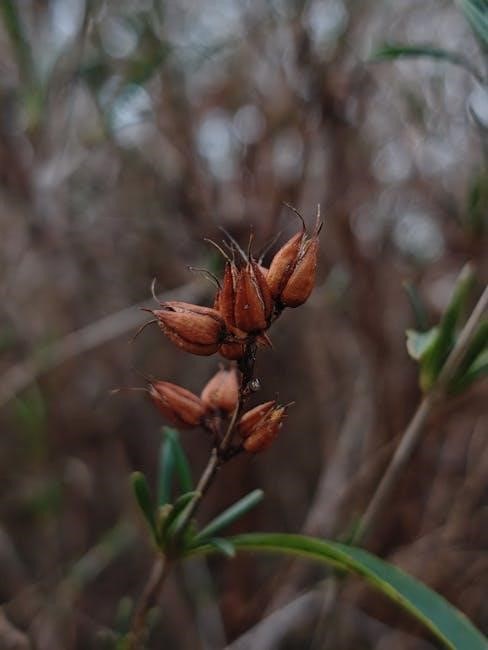
This comprehensive guide details various tree seed pod types, dispersal methods, and identification techniques, utilizing resources like online databases and field guides․
Tree seed pods represent the remarkable diversity of plant reproduction strategies․ These structures, often overlooked, are crucial for species propagation and ecosystem health․ Understanding seed pod identification unlocks a deeper appreciation for the natural world, allowing for accurate tree species determination even when leaves or flowers are absent․
Seed pods encapsulate and protect developing seeds, employing ingenious mechanisms for dispersal – wind, water, animals, or even explosive ejection․ Their forms vary dramatically, from the winged samaras of maples to the spiky spheres of sweetgum, and the hard shells of nuts․ This guide provides a foundational understanding of these diverse forms, aiding in accurate identification and fostering a greater connection with the trees around us․
Common Tree Seed Pod Types
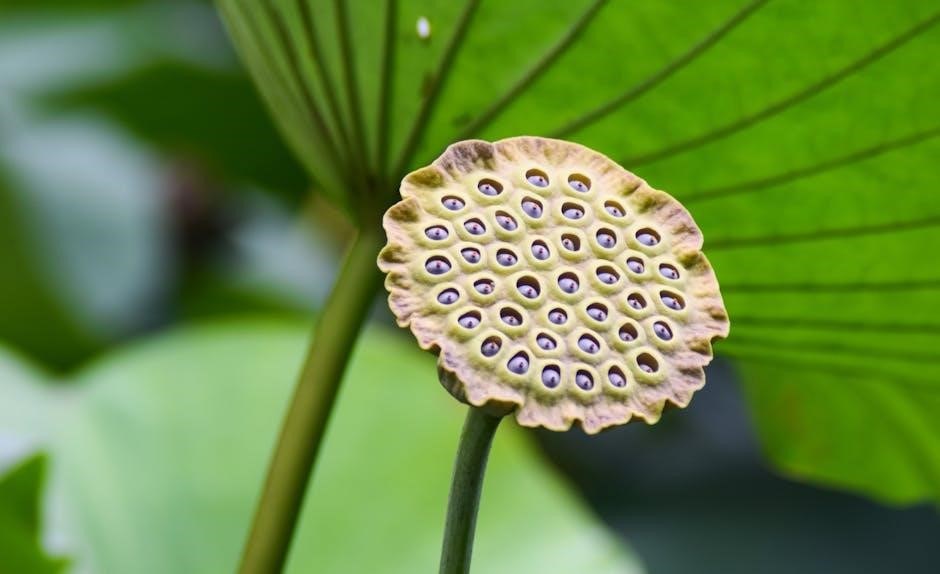
Explore diverse seed pod classifications: samaras, capsules, legumes, nuts, and cones, each with unique characteristics aiding in tree identification and ecological understanding․
Samaras (Winged Seeds)
Samaras, often called winged seeds, are brilliantly adapted for wind dispersal, featuring a papery wing extending from the seed body․ This aerodynamic structure allows them to spin as they fall, slowing descent and maximizing distance traveled from the parent tree․ Maple and ash trees are prime examples, though their samaras differ in key ways․
Identifying samaras involves noting the wing angle, size, and whether they occur singly or in pairs․ Understanding these features is crucial for pinpointing the tree species, as samara morphology is often species-specific․ Observing the surrounding trees and leaf characteristics further aids accurate identification․
Maple Samaras: Identification & Characteristics
Maple samaras are typically characterized by a distinctive “helicopter” shape, featuring two wings spread at a wide angle – often nearly 180 degrees․ These samaras usually occur in pairs, connected at the base․ Their size varies depending on the maple species, ranging from small, delicate wings to larger, more robust structures․
Color can range from greenish-yellow when young to brown as they mature․ Identifying the specific maple species requires observing leaf shape, bark texture, and overall tree form alongside the samara characteristics․ The wide wing angle is a key identifier for maple samaras․
Ash Samaras: Distinguishing Features
Ash samaras, unlike maples, possess a single wing extending from the seed, giving them a paddle-like appearance․ They typically hang in clusters, often appearing more numerous than maple samaras․ A key distinguishing feature is the presence of a notch at the end of the samara, which is absent in maple varieties․
Ash samaras are generally green when young, maturing to a brownish hue․ Their size is relatively consistent across ash species․ Observing the arrangement – in dense clusters – and the single-wing structure are crucial for accurate identification․ These features differentiate them clearly from other winged seeds․
Capsules
Capsules represent a distinct seed pod type, characterized by a dry, multi-chambered structure that splits open to release seeds․ Unlike samaras or legumes, capsules don’t rely on wings or splitting seams for dispersal․ They often exhibit unique textures and shapes, varying significantly between tree species․
Magnolia and sweetgum trees are prime examples, showcasing dramatically different capsule forms․ Magnolia pods reveal bright-colored seeds attached to fleshy stalks, while sweetgum pods are famously spiky․ Identifying capsules involves noting the pod’s overall shape, texture, and the method of seed release – whether through pores or splitting sections․
Magnolia Seed Pods: Appearance and Dispersal
Magnolia seed pods are visually striking, developing from elongated, cone-like structures; Upon maturity, these pods split open to reveal rows of brightly colored seeds, typically red or orange, attached to fleshy, stalk-like funiculi․ This vibrant coloration serves to attract birds, the primary agents of seed dispersal for magnolias․
The fleshy stalks aid in animal dispersal, as birds consume the seeds and deposit them in new locations․ Pods generally range from 4 to 6 inches in length․ Identifying features include the pod’s cylindrical shape and the prominent, colorful seeds․ Observing the remnants of split pods on the ground is a key identification clue․
Sweetgum Seed Pods: Spiky Spheres
Sweetgum seed pods are easily recognized by their unique spherical shape and numerous spiky projections․ These pods, typically 1 to 1․5 inches in diameter, start green and mature to brown․ The spikes, while appearing formidable, are relatively soft and don’t pose a significant hazard․ Inside each pod, you’ll find two or more small, winged seeds․
Dispersal is primarily achieved through wind, aided by the winged seeds․ The spiky exterior likely offers some protection against premature seed predation․ Observing these distinctive pods beneath a Sweetgum tree is a reliable identification method․ Their unusual form makes them quite memorable!
Legumes (Pods that Split)

Legumes represent a fascinating category of tree seed pods characterized by their ability to split open along defined seams when mature․ This splitting action releases the seeds contained within, facilitating dispersal․ Several tree species produce legume-type pods, notably within the Fabaceae (pea) family․ These pods exhibit diverse shapes and sizes, ranging from slender and curved to broader and more cylindrical․
Identifying legumes involves observing this splitting characteristic and the arrangement of seeds inside․ The pod walls can be woody or papery, offering clues to the specific tree species․ Understanding legume structure aids in accurate tree identification and ecological studies․
Locust Tree Seed Pods: Long, Twisted Forms
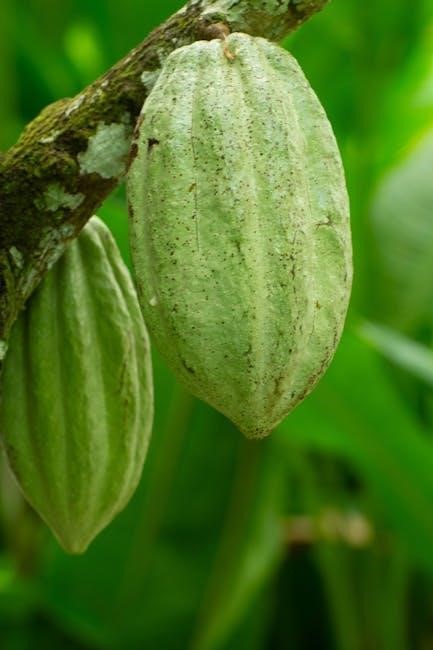
Locust tree seed pods are readily identifiable by their remarkably long, often dramatically twisted, and flattened shape․ These pods, typically brown or reddish-brown, can reach lengths of up to several inches, exhibiting a distinctive curved or coiled appearance․ They develop from the fragrant flowers of locust trees, maturing in the fall․
The pods contain several hard, dark-colored seeds arranged within the pod’s chambers․ Observing the pod’s length, degree of twisting, and seed arrangement are key identification features․ These unique pods contribute to the tree’s characteristic silhouette and dispersal strategy․
Honey Locust Seed Pods: Smooth vs․ Thorny Varieties
Honey locust seed pods present a fascinating variation: some trees produce smooth pods, while others bear pods adorned with formidable thorns․ These pods are typically flattened, elongated, and range in color from greenish-brown to dark brown․ Pod length varies, generally reaching several inches in length․
The presence or absence of thorns is the primary distinguishing characteristic․ Thorny pods offer protection against herbivores․ Inside, the pods contain sweet pulp surrounding the seeds – hence the “honey” in the tree’s name․ Careful observation of the pod’s surface texture is crucial for accurate identification․
Nuts (Hard-Shelled Seeds)
Nuts represent a robust form of seed protection, encased within a hard, outer shell․ These are a vital food source for wildlife and often exhibit specific characteristics aiding in identification․ Common examples include acorns from oak trees and beech nuts․ Acorns are typically rounded or oblong, featuring a cap-like structure․
Beech nuts, conversely, are smaller, triangular, and lack a prominent cap; The shell’s texture, color, and size are key identifiers․ Recognizing these features helps distinguish between different nut-bearing tree species, contributing to broader tree identification skills․
Acorns: Oak Tree Seed Identification
Acorns, the seeds of oak trees, are easily recognizable by their distinctive shape and cap․ They generally consist of a nut, varying in size and shape depending on the oak species, and a cupule – the cap enclosing part of the nut․ Identifying the acorn’s cap scale texture (smooth or hairy) and the nut’s shape (elongated or rounded) are crucial․
Color variations, from light tan to reddish-brown, also aid identification․ Observing the attachment style of the cap to the nut provides further clues․ These details collectively help pinpoint the specific oak tree species producing the acorn․
Beech Nuts: Small and Triangular
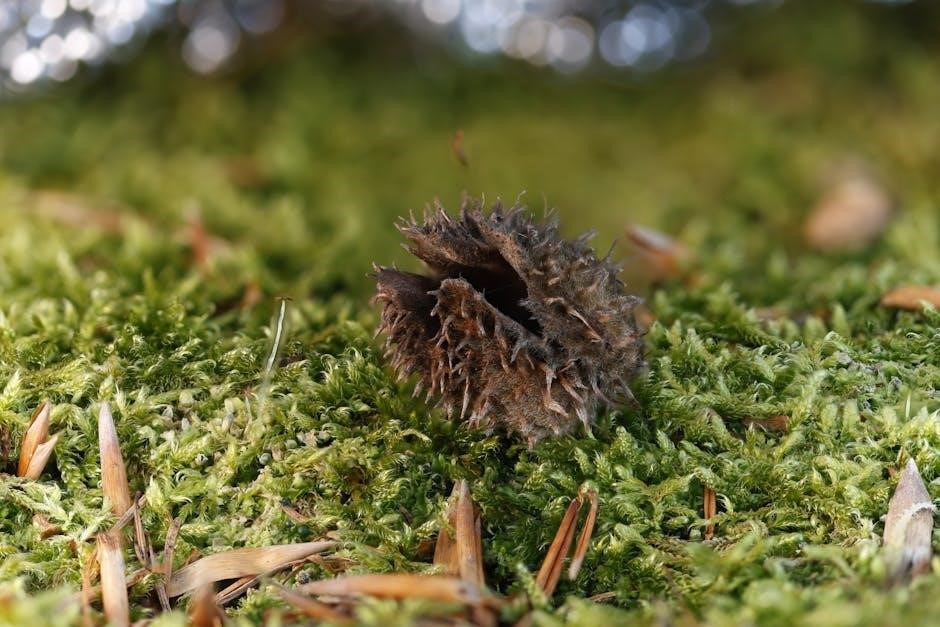
Beech nuts are small, triangular seeds found within a prickly, four-segmented husk․ Unlike acorns with prominent caps, beech nuts are contained within a bur-like structure that opens to release the nuts․ These nuts are typically light tan to brown in color and possess a smooth, hard shell․
Their small size and unique triangular shape distinguish them from other nut-bearing tree seeds․ Observing the husk’s spiny exterior and the nuts’ arrangement within is key to identification․ Beech nuts are an important food source for wildlife․
Cones (Scale-Bearing Structures)
Cones represent a distinctive seed pod type, primarily associated with coniferous trees like pines and spruces․ These structures are composed of overlapping scales that protect developing seeds․ Cone size, shape, and scale characteristics vary significantly between species, offering crucial identification clues․
Mature cones release seeds when scales dry and open, often triggered by environmental factors․ Examining needle count alongside cone morphology aids in accurate tree identification․ Understanding cone anatomy – including scale texture and arrangement – is fundamental for distinguishing different conifer types․
Pine Cone Identification: Needle Count & Shape
Identifying pine trees through their cones involves observing both cone shape and needle arrangement․ Pine cones exhibit diverse forms – elongated, ovoid, or globular – and scale textures, ranging from smooth to prickly․ Crucially, the number of needles per bundle is a key identifier․
For instance, longleaf pines have three needles per bundle, while loblolly pines typically have two․ Combining cone characteristics with needle count provides a reliable method for species determination․ Scale thickness and the presence of prickles also contribute to accurate pine identification in the field․
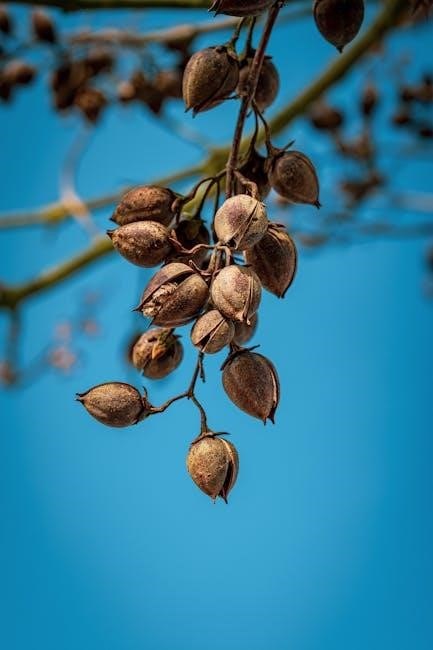
Spruce Cone Characteristics: Flexible Scales
Spruce cones are notably distinct due to their papery, flexible scales, which differ significantly from the woody scales of pine cones․ These scales aren’t designed to open and release seeds upon maturity like pine cones; instead, they fall from the branch intact, dispersing seeds as the cone disintegrates;
Spruce cones typically hang downwards, and their shape varies from cylindrical to ovoid․ Observing the flexibility of the scales, alongside the cone’s position on the branch, is crucial for accurate identification․ Color can range from greenish-purple to brown, aiding in species differentiation․
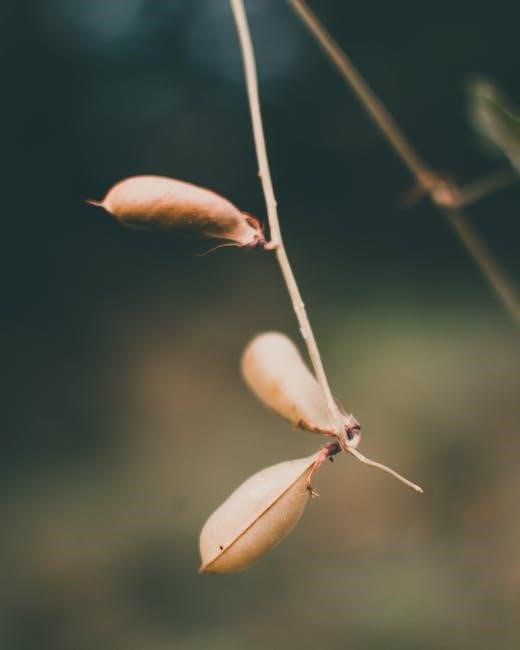
Seed Pod Dispersal Methods
Seed dispersal relies on wind, animals, and other mechanisms to spread seeds; understanding these methods—like samara wings or fleshy pods—is key to identification․
Wind Dispersal: Utilizing Samaras and Lightweight Seeds
Wind dispersal is a remarkably effective strategy employed by numerous tree species to propagate their seeds across considerable distances․ This method heavily relies on adaptations that enhance buoyancy and allow seeds to be carried by air currents․ A prime example is the samara, a winged seed pod characteristic of maple and ash trees․
The wing-like structure increases surface area, creating drag and enabling the seed to spin as it falls, effectively slowing its descent and extending its travel range․ Beyond samaras, some trees produce incredibly lightweight seeds, almost dust-like, which can remain airborne for extended periods, traveling vast distances on even gentle breezes․ Observing the presence of wings or exceptionally small seed size is a strong indicator of wind dispersal․
Animal Dispersal: Nuts and Fleshy Pods
Animal dispersal represents a crucial propagation method for many tree species, leveraging the movement of creatures for seed distribution․ Nuts, like acorns and beechnuts, are frequently cached by squirrels and other rodents for later consumption․ Often, these caches are forgotten, allowing the seeds to germinate and establish new trees․

Trees also produce fleshy pods or fruits that attract animals․ These animals consume the fruit, and the seeds pass through their digestive systems unharmed, being deposited in new locations via their droppings․ This process not only disperses seeds but also provides a natural form of scarification, aiding germination․ Identifying remnants of animal activity near seed pods suggests animal dispersal․
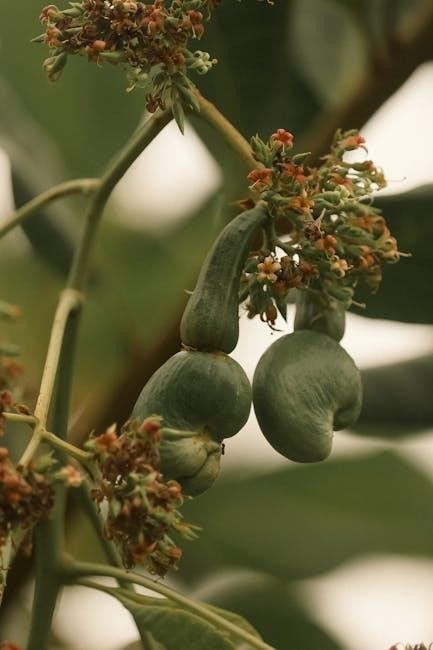
Identifying Seed Pods by Tree Type
Categorizing by tree type – deciduous versus evergreen – simplifies identification, as each group exhibits distinct seed pod characteristics and dispersal strategies․
Deciduous Tree Seed Pods
Deciduous trees, known for shedding leaves annually, produce a diverse array of seed pods․ Many utilize samaras – winged seeds like those of maples and ashes – for wind dispersal, showcasing unique shapes and sizes․ Others, such as sweetgums, develop spiky capsules, while locust trees form long, twisted legumes․
Magnolia seed pods are notable for their fleshy, cone-like structures, often splitting open to reveal bright seeds․ Identifying these pods relies on observing their form, texture (smooth, spiky, or winged), and the tree’s leaf characteristics․ Understanding seasonal changes is also crucial, as pods mature and release seeds at different times of the year, aiding accurate identification․
Evergreen Tree Seed Pods
Evergreen trees, retaining foliage year-round, typically employ cones for seed protection and dispersal․ Pine cones vary significantly in size, shape, and scale structure, with needle count assisting identification․ Spruce cones are characterized by flexible scales that fall intact, unlike pine cones which retain a central spike․
However, not all evergreen seed pods are cones; some exhibit capsule-like structures․ Identifying evergreen seed pods requires careful observation of cone morphology – scale shape, presence of prickles, and overall size – alongside the tree’s needle arrangement and bark characteristics․ Seasonal timing of cone maturation is also a key identification factor․
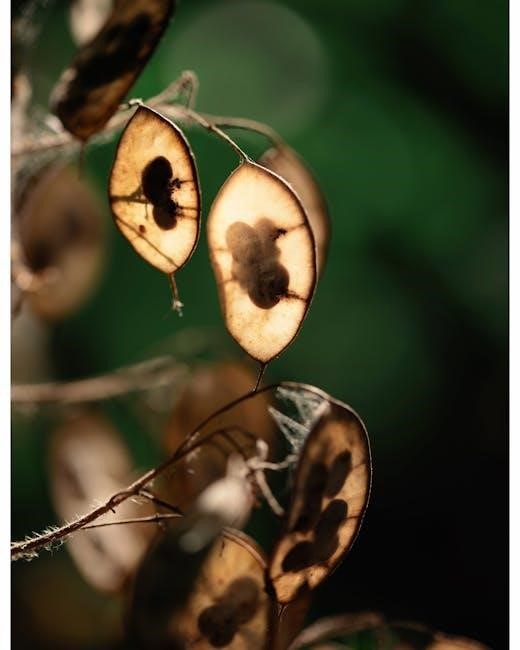
Resources for Further Identification
Expand your knowledge using online databases, detailed field guides, and visits to botanical gardens or arboretums for hands-on learning experiences․
Online Databases and Field Guides
Numerous online resources offer detailed information and visual aids for tree seed pod identification․ Websites dedicated to botany, forestry, and native plant species often include extensive image galleries and descriptive characteristics․ These databases allow users to search by pod shape, size, tree type, or geographic location, streamlining the identification process․
Field guides, both physical and digital, provide a portable and comprehensive reference․ Look for guides specifically focused on trees and their reproductive structures․ These guides typically feature high-quality photographs or illustrations alongside detailed descriptions of seed pods, leaves, bark, and overall tree morphology․ Utilizing both online databases and field guides offers a robust approach to accurate identification, enhancing your understanding of the natural world․
Botanical Gardens and Arboretums
Botanical gardens and arboretums present invaluable opportunities for hands-on tree seed pod identification․ These curated collections showcase a diverse range of tree species, often labeled with detailed information including pod characteristics and dispersal methods․ Observing actual seed pods in their natural context, rather than relying solely on images, significantly aids learning․
Educational programs and guided tours offered by these institutions can further enhance your understanding․ Experts can provide insights into identifying subtle differences between similar pod types and explain the ecological roles they play․ Many gardens also maintain reference collections, allowing close examination of various seed pods․ Visiting these spaces offers an immersive and enriching experience for anyone interested in tree identification․